
Pepsi
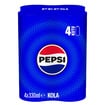
Pepsi Kola Kutu 330 Ml
Nutrition Score
59 / 100
#23 of 54 in Cola
Origin
Türkiye
- Natural, unprocessed food1Natural, unprocessed food
- Basic food ingredient1Basic food ingredient
- Food component or supplement2Food component or supplement
- Additive or processed ingredient3Additive or processed ingredient
- Ingredient that needs attention1Ingredient that needs attention
- Origin: Türkiye
Besin AI summary
A plain-language summary of this product's ingredients is available in Besin App.
Nutrition facts
Per 100 g- Energy
- 28 kcal / 119 kJ
- Fat
- 0 g
- Saturated fat
- 0 g
- Carbohydrate
- 7 g
- Sugars
- 7 g
- Fibre
- 0 g
- Protein
- 0 g
- Salt
- 0.01 g
Ingredients
8 ingredientsWater
What is this ingredient?
Water used as a food ingredient.
Ingredient class: 1
Natural, unprocessed food
Foods as they come from nature, or only washed, dried, frozen or ground. Nothing such as salt, sugar or oil has been added. For example fruit, vegetables, pulses, raw nuts, oats, meat, milk and eggs.
Sugar
What is this ingredient?
Refined sucrose used as a sweetener.
Ingredient class: 2
Basic food ingredient
Traditional ingredients used in home cooking. They are not made in a laboratory but by pressing, milling, drying, cooking or fermenting. For example salt, sugar, honey, butter, olive oil, flour, vinegar, yeast, yogurt cultures and spices.
Fructose-glucose syrup
What is this ingredient?
Glucose-fructose syrup is a liquid sweetener made by breaking down starch (usually from maize) with enzymes (a natural substance that brings about a specific change in food) and converting part of the glucose into fructose. It is used in biscuits, cakes, drinks and confectionery to sweeten and retain moisture. It raises blood sugar quickly, so it should be treated like sugar. Eating a lot of it increases sugar intake.
Ingredient class: 4
Additive or processed ingredient
Substances added for a technical purpose such as colour, flavour, sweetness, texture or a longer shelf life. They belong here even when they come from natural sources; this is where E-number additives and all flavourings, natural ones included, go. Being in this group does not mean harmful; it shows that the product is industrially processed. For example citric acid, lecithin, pectin, guar gum, curcumin, beetroot red, potassium sorbate, modified starch and flavourings.
- Read the E290 guide →
Carbon dioxide
E290What is this ingredient?
Carbon dioxide (E290) is a colourless, odourless gas that occurs naturally in air. It is used to give fizzy drinks their bubbles and freshness, and as a packaging gas in meat, cheese and ready-meal packs to slow spoilage. It is obtained as a by-product of fermentation (a natural process using microbes such as yeast or bacteria), natural gas sources or industrial processes and then purified. It adds no nutritional value; no adverse effects are known at the amounts used in food. The carbon dioxide in fizzy drinks can cause a bloated feeling and belching in some people.
Ingredient class: 4
Additive or processed ingredient
Substances added for a technical purpose such as colour, flavour, sweetness, texture or a longer shelf life. They belong here even when they come from natural sources; this is where E-number additives and all flavourings, natural ones included, go. Being in this group does not mean harmful; it shows that the product is industrially processed. For example citric acid, lecithin, pectin, guar gum, curcumin, beetroot red, potassium sorbate, modified starch and flavourings.
Caramel colour
E150What is this ingredient?
Caramel colour is the common name for brown colours made by heating sugar. There are four types: plain caramel (E150a), caustic sulphite caramel (E150b), ammonia caramel (E150c) and sulphite ammonia caramel (E150d). It is used in colas, sauces, vinegar, biscuits and confectionery. The label does not say which type is used. For ammonia caramel, one of these types, the European Food Safety Authority set a lower safe intake because a by-product formed during its manufacture reduced immune cells in rats, and found that this amount can be exceeded in some consumer groups. Since our priority is protecting consumers, we assess unspecified caramel colour by this possibility and list it as an ingredient that needs attention.
Ingredient class: 5
Ingredient that needs attention
Ingredients that call for attention because of an official assessment or a scientific study. An ingredient needs a concrete reason to be placed here: being classified as a possible carcinogen, being banned in some countries or restricted by food authorities, carrying a mandatory health warning, or being an allergen. Being natural or synthetic does not decide it on its own. For example aspartame, sulphites, nitrites, titanium dioxide, tartrazine, smoke flavourings and partially hydrogenated fats.
Phosphoric acid
E338What is this ingredient?
Phosphoric acid (E338) is an acidity regulator that gives cola-type fizzy drinks their sharp sour taste. It is used mainly in colas and some other drinks, and in products such as processed cheese and sauces, to adjust acidity. It is made by purifying and processing phosphorus obtained from phosphate rock. It is a source of phosphorus; phosphate is among the substances that people with kidney disease need to limit, and high intake from phosphate additives is a matter of debate. Frequently drinking fizzy drinks can also wear down tooth enamel.
Ingredient class: 4
Additive or processed ingredient
Substances added for a technical purpose such as colour, flavour, sweetness, texture or a longer shelf life. They belong here even when they come from natural sources; this is where E-number additives and all flavourings, natural ones included, go. Being in this group does not mean harmful; it shows that the product is industrially processed. For example citric acid, lecithin, pectin, guar gum, curcumin, beetroot red, potassium sorbate, modified starch and flavourings.
Kafein
What is this ingredient?
An ingredient used for a functional or technical purpose.
Ingredient class: 3
Food component or supplement
Components without an E number, made by juicing, drying or extracting fruit, vegetables or plants. Even when they add colour or flavour, they are food rather than additives. Vitamins and minerals added to raise the nutritional value belong here too. For example vanilla extract, beetroot juice concentrate, black carrot extract, spirulina, dietary fibre, gelatine, vitamin C, vitamin D and iron.
Cola extract
What is this ingredient?
An ingredient used to add flavour or aroma.
Ingredient class: 3
Food component or supplement
Components without an E number, made by juicing, drying or extracting fruit, vegetables or plants. Even when they add colour or flavour, they are food rather than additives. Vitamins and minerals added to raise the nutritional value belong here too. For example vanilla extract, beetroot juice concentrate, black carrot extract, spirulina, dietary fibre, gelatine, vitamin C, vitamin D and iron.
Higher-scoring products in Cola
Information is compiled from the product packaging. If you spot a mistake, let us know. How is the Nutrition Score calculated?