
Şütte
Şütte Frankfurter Kavanoz Sosis 200 G
Nutrition Score
36 / 100
#23 of 39 in Sausage
Origin
Türkiye
- Natural, unprocessed food4Natural, unprocessed food
- Basic food ingredient2Basic food ingredient
- Additive or processed ingredient7Additive or processed ingredient
- Ingredient that needs attention2Ingredient that needs attention
- Origin: Türkiye
Besin AI summary
A plain-language summary of this product's ingredients is available in Besin App.
Nutrition facts
Per 100 g- Energy
- 205 kcal / 858 kJ
- Fat
- 15 g
- Saturated fat
- 7 g
- Carbohydrate
- 5 g
- Sugars
- 0 g
- Fibre
- —
- Protein
- 12 g
- Salt
- 1.8 g
Ingredients
15 ingredientsBeef and fat
What is this ingredient?
A red meat- or offal-based ingredient.
Ingredient class: 1
Natural, unprocessed food
Foods as they come from nature, or only washed, dried, frozen or ground. Nothing such as salt, sugar or oil has been added. For example fruit, vegetables, pulses, raw nuts, oats, meat, milk and eggs.
Spice blend
What is this ingredient?
A blend of spices used to add flavour to food.
Ingredient class: 2
Basic food ingredient
Traditional ingredients used in home cooking. They are not made in a laboratory but by pressing, milling, drying, cooking or fermenting. For example salt, sugar, honey, butter, olive oil, flour, vinegar, yeast, yogurt cultures and spices.
Flavour enhancer
What is this ingredient?
This ingredient is listed on the label only as "flavour enhancer", without saying which one. It could be a flavour enhancer such as ribonucleotides, or monosodium glutamate (MSG), whose safe daily intake can be exceeded. Because the substance used is not named, it cannot be assessed. Since our priority is protecting consumers, we assess unnamed ingredients by the least favourable possibility and list them as ingredients that need attention.
Ingredient class: 4
Additive or processed ingredient
Substances added for a technical purpose such as colour, flavour, sweetness, texture or a longer shelf life. They belong here even when they come from natural sources; this is where E-number additives and all flavourings, natural ones included, go. Being in this group does not mean harmful; it shows that the product is industrially processed. For example citric acid, lecithin, pectin, guar gum, curcumin, beetroot red, potassium sorbate, modified starch and flavourings.
Sodium nitrite
E250What is this ingredient?
Sodium nitrite is used in processed meats such as sucuk, salami, sausages and pastırma to stop harmful bacteria from growing, especially the bacterium that causes deadly food poisoning (botulism), and to give the meat its pinkish-red colour. It is made synthetically in the laboratory. Nitrites can turn into substances called nitrosamines in the stomach or when meat is cooked at high temperatures; some nitrosamines are known to cause cancer in animal studies. The International Agency for Research on Cancer, part of the World Health Organization, classifies nitrite and nitrate taken in under these conditions as probably carcinogenic to humans, and in 2015 it classified processed meat as carcinogenic, based on studies linking its consumption to bowel cancer. For this reason, in 2023 the European Union lowered the permitted amounts of nitrites and nitrates in meat, fish and cheese products.
Ingredient class: 5
Ingredient that needs attention
Ingredients that call for attention because of an official assessment or a scientific study. An ingredient needs a concrete reason to be placed here: being classified as a possible carcinogen, being banned in some countries or restricted by food authorities, carrying a mandatory health warning, or being an allergen. Being natural or synthetic does not decide it on its own. For example aspartame, sulphites, nitrites, titanium dioxide, tartrazine, smoke flavourings and partially hydrogenated fats.
Sodium acetate
E262What is this ingredient?
Sodium acetates (E262) are the sodium salts of acetic acid, the main component of vinegar; the group includes sodium acetate and sodium diacetate. They are used in crisp seasonings, meat products, sauces and baked goods to give a vinegary sour taste, regulate acidity and slow the growth of moulds and bacteria. They are made by neutralising acetic acid with sodium hydroxide or sodium carbonate. As it contains sodium, it can add to salt intake in large amounts; apart from this, no adverse effects are known at the amounts used in food.
Ingredient class: 4
Additive or processed ingredient
Substances added for a technical purpose such as colour, flavour, sweetness, texture or a longer shelf life. They belong here even when they come from natural sources; this is where E-number additives and all flavourings, natural ones included, go. Being in this group does not mean harmful; it shows that the product is industrially processed. For example citric acid, lecithin, pectin, guar gum, curcumin, beetroot red, potassium sorbate, modified starch and flavourings.
- Read the E450 guide →
E450
E450What is this ingredient?
Diphosphates (E450) are sodium or potassium salts of phosphoric acid and are used as emulsifiers (a substance that helps fat and water mix), stabilisers (a substance that keeps the texture stable) and raising agents. They hold water and improve texture in meat products, prawns, cheese, cakes and biscuits, and help dough rise. They are made by neutralising phosphoric acid with sodium or potassium compounds. Phosphates are among the substances that people with kidney disease need to limit, and the effect of high intake from phosphate additives is still debated. It adds no significant nutritional value.
Ingredient class: 4
Additive or processed ingredient
Substances added for a technical purpose such as colour, flavour, sweetness, texture or a longer shelf life. They belong here even when they come from natural sources; this is where E-number additives and all flavourings, natural ones included, go. Being in this group does not mean harmful; it shows that the product is industrially processed. For example citric acid, lecithin, pectin, guar gum, curcumin, beetroot red, potassium sorbate, modified starch and flavourings.
- Read the E452 guide →
Polyphosphates
E452What is this ingredient?
Polyphosphates (E452) are a group of salts made of many phosphate units linked in a chain, the most common being sodium polyphosphate. They are used as emulsifying salts (a salt that stops fat separating in processed cheese) in processed and cream cheeses to keep them smooth, and in meat and chicken products to help retain water and control texture. They are made by reacting phosphoric acid with sodium, potassium or calcium compounds and heating the result to a high temperature. It is a source of phosphate; phosphates are among the substances people with kidney disease need to limit, and high intake from phosphate additives is under discussion. Those that contain sodium also add to salt intake.
Ingredient class: 4
Additive or processed ingredient
Substances added for a technical purpose such as colour, flavour, sweetness, texture or a longer shelf life. They belong here even when they come from natural sources; this is where E-number additives and all flavourings, natural ones included, go. Being in this group does not mean harmful; it shows that the product is industrially processed. For example citric acid, lecithin, pectin, guar gum, curcumin, beetroot red, potassium sorbate, modified starch and flavourings.
- Read the E300 guide →
Ascorbic acid
E300What is this ingredient?
Ascorbic acid (E300), also known as vitamin C, is used in food as an antioxidant. It is used in fruit juices, meat products, crisps, dried vegetables and baked goods to prevent changes in colour and flavour, and in dough as a flour treatment agent; it is also added to some products as a source of vitamin C. Industrially, it is made from glucose by fermentation (a natural process using microbes such as yeast or bacteria) and chemical processing. As it is vitamin C, it is a source of the vitamin; no adverse effects are known at the amounts used in food.
Ingredient class: 4
Additive or processed ingredient
Substances added for a technical purpose such as colour, flavour, sweetness, texture or a longer shelf life. They belong here even when they come from natural sources; this is where E-number additives and all flavourings, natural ones included, go. Being in this group does not mean harmful; it shows that the product is industrially processed. For example citric acid, lecithin, pectin, guar gum, curcumin, beetroot red, potassium sorbate, modified starch and flavourings.
Sodium ascorbate
E301What is this ingredient?
Sodium ascorbate (E301) is the sodium salt of ascorbic acid (vitamin C) and is used in food as an antioxidant. It helps preserve colour, especially in meat products such as salami, sausages and doner; it is also added to some products as a source of vitamin C. It is made by neutralising ascorbic acid with sodium bicarbonate or sodium carbonate. It is a source of vitamin C; as it contains sodium it can add slightly to salt intake in very large amounts, but no adverse effects are known at the amounts used in food.
Ingredient class: 4
Additive or processed ingredient
Substances added for a technical purpose such as colour, flavour, sweetness, texture or a longer shelf life. They belong here even when they come from natural sources; this is where E-number additives and all flavourings, natural ones included, go. Being in this group does not mean harmful; it shows that the product is industrially processed. For example citric acid, lecithin, pectin, guar gum, curcumin, beetroot red, potassium sorbate, modified starch and flavourings.
- Read the E331 guide →
Sodium citrates
E331What is this ingredient?
Sodium citrates (E331) are the sodium salts of citric acid; the group includes monosodium, disodium and trisodium citrate. They are used in confectionery, drinks, processed cheese, meat products and desserts to regulate acidity, soften sourness and maintain texture. They are made by neutralising citric acid with sodium hydroxide or sodium carbonate. It adds no nutritional value; as it contains sodium it can add slightly to salt intake in very large amounts, but no adverse effects are known at the amounts used in food.
Ingredient class: 4
Additive or processed ingredient
Substances added for a technical purpose such as colour, flavour, sweetness, texture or a longer shelf life. They belong here even when they come from natural sources; this is where E-number additives and all flavourings, natural ones included, go. Being in this group does not mean harmful; it shows that the product is industrially processed. For example citric acid, lecithin, pectin, guar gum, curcumin, beetroot red, potassium sorbate, modified starch and flavourings.
Lemon
What is this ingredient?
A fruit-, vegetable- or fibre-based ingredient.
Ingredient class: 1
Natural, unprocessed food
Foods as they come from nature, or only washed, dried, frozen or ground. Nothing such as salt, sugar or oil has been added. For example fruit, vegetables, pulses, raw nuts, oats, meat, milk and eggs.
Onion
What is this ingredient?
A fruit-, vegetable- or fibre-based ingredient.
Ingredient class: 1
Natural, unprocessed food
Foods as they come from nature, or only washed, dried, frozen or ground. Nothing such as salt, sugar or oil has been added. For example fruit, vegetables, pulses, raw nuts, oats, meat, milk and eggs.
Starch
What is this ingredient?
A grain- or flour-based food ingredient.
Ingredient class: 2
Basic food ingredient
Traditional ingredients used in home cooking. They are not made in a laboratory but by pressing, milling, drying, cooking or fermenting. For example salt, sugar, honey, butter, olive oil, flour, vinegar, yeast, yogurt cultures and spices.
Water
What is this ingredient?
Water used as a food ingredient.
Ingredient class: 1
Natural, unprocessed food
Foods as they come from nature, or only washed, dried, frozen or ground. Nothing such as salt, sugar or oil has been added. For example fruit, vegetables, pulses, raw nuts, oats, meat, milk and eggs.
Show all ingredients (15)
Natural smoke flavour
What is this ingredient?
Smoke flavouring is used to give food the taste and smell of food smoked over a wood fire. It is used in smoked meat and fish products, cheeses, crisps, nuts and sauces. It is made by condensing the smoke from burning wood and turning it into a liquid or powder. The word "natural" on the label shows that the flavouring comes from real wood smoke; however, all the smoke flavourings assessed are made from wood smoke anyway. In 2023 the European Food Safety Authority could not rule out a risk of damage to genetic material for any of the smoke flavourings it assessed, and the European Union decided to phase them out for this reason. Traditional smoking with real wood smoke is not affected by this decision.
Ingredient class: 5
Ingredient that needs attention
Ingredients that call for attention because of an official assessment or a scientific study. An ingredient needs a concrete reason to be placed here: being classified as a possible carcinogen, being banned in some countries or restricted by food authorities, carrying a mandatory health warning, or being an allergen. Being natural or synthetic does not decide it on its own. For example aspartame, sulphites, nitrites, titanium dioxide, tartrazine, smoke flavourings and partially hydrogenated fats.
Higher-scoring products in Sausage
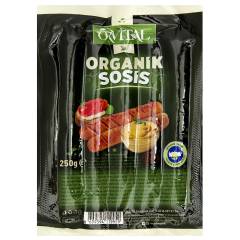
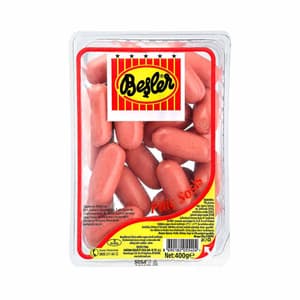
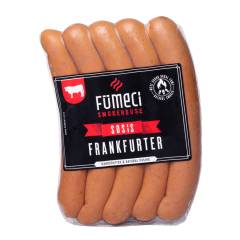
Information is compiled from the product packaging. If you spot a mistake, let us know. How is the Nutrition Score calculated?