
Superfresh
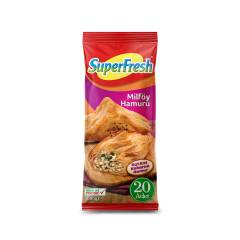
SuperFresh Tereyağlı Milföy Hamuru 1 Kg
Nutrition Score
41 / 100
#6 of 6 in Frozen Dough
Origin
Türkiye
- Natural, unprocessed food1Natural, unprocessed food
- Basic food ingredient12Basic food ingredient
- Food component or supplement1Food component or supplement
- Additive or processed ingredient13Additive or processed ingredient
- Origin: Türkiye
Besin AI summary
A plain-language summary of this product's ingredients is available in Besin App.
Nutrition facts
Per 100 g- Energy
- 363 kcal / 1,520 kJ
- Fat
- 22.3 g
- Saturated fat
- 11.6 g
- Carbohydrate
- 33.7 g
- Sugars
- 0 g
- Fibre
- 0 g
- Protein
- 5.6 g
- Salt
- 1.6 g
Ingredients
27 ingredientsWheat flour
What is this ingredient?
A grain- or flour-based food ingredient.
Ingredient class: 2
Basic food ingredient
Traditional ingredients used in home cooking. They are not made in a laboratory but by pressing, milling, drying, cooking or fermenting. For example salt, sugar, honey, butter, olive oil, flour, vinegar, yeast, yogurt cultures and spices.
Palm oil
What is this ingredient?
A refined vegetable oil obtained from oil palm fruit.
Ingredient class: 2
Basic food ingredient
Traditional ingredients used in home cooking. They are not made in a laboratory but by pressing, milling, drying, cooking or fermenting. For example salt, sugar, honey, butter, olive oil, flour, vinegar, yeast, yogurt cultures and spices.
Canola oil
What is this ingredient?
A plant- or animal-based fat.
Ingredient class: 2
Basic food ingredient
Traditional ingredients used in home cooking. They are not made in a laboratory but by pressing, milling, drying, cooking or fermenting. For example salt, sugar, honey, butter, olive oil, flour, vinegar, yeast, yogurt cultures and spices.
Cottonseed oil
What is this ingredient?
A refined vegetable oil obtained from cottonseed.
Ingredient class: 2
Basic food ingredient
Traditional ingredients used in home cooking. They are not made in a laboratory but by pressing, milling, drying, cooking or fermenting. For example salt, sugar, honey, butter, olive oil, flour, vinegar, yeast, yogurt cultures and spices.
Sunflower oil
What is this ingredient?
A plant- or animal-based fat.
Ingredient class: 2
Basic food ingredient
Traditional ingredients used in home cooking. They are not made in a laboratory but by pressing, milling, drying, cooking or fermenting. For example salt, sugar, honey, butter, olive oil, flour, vinegar, yeast, yogurt cultures and spices.
- Read the E471 guide →
Mono-and diglycerides of fatty acids
E471What is this ingredient?
Mono- and diglycerides of fatty acids (E471) are an emulsifier that helps fat and water mix and are among the most widely used emulsifiers in food. They are used in bread, cakes, biscuits, ice cream, margarine and chocolate products to keep the texture soft, slow down staling and stop fat from separating. They are made by reacting fats with glycerol at high temperature; they can come from vegetable or animal fats, and if the label does not state the source it cannot be told which was used. It is digested in the body like fats; no adverse effects are known at the amounts used in food.
Ingredient class: 4
Additive or processed ingredient
Substances added for a technical purpose such as colour, flavour, sweetness, texture or a longer shelf life. They belong here even when they come from natural sources; this is where E-number additives and all flavourings, natural ones included, go. Being in this group does not mean harmful; it shows that the product is industrially processed. For example citric acid, lecithin, pectin, guar gum, curcumin, beetroot red, potassium sorbate, modified starch and flavourings.
- Read the E322 guide →
Sunflower lecithin
E322What is this ingredient?
Sunflower lecithin (E322) is an emulsifier that helps fat and water mix. It is used in chocolate, biscuits, margarine and baked goods to control texture and stop fat from separating. It is obtained when sunflower oil is refined. It adds no significant nutritional value; no adverse effects are known at the amounts used in food.
Ingredient class: 4
Additive or processed ingredient
Substances added for a technical purpose such as colour, flavour, sweetness, texture or a longer shelf life. They belong here even when they come from natural sources; this is where E-number additives and all flavourings, natural ones included, go. Being in this group does not mean harmful; it shows that the product is industrially processed. For example citric acid, lecithin, pectin, guar gum, curcumin, beetroot red, potassium sorbate, modified starch and flavourings.
- Read the E322 guide →
Soy lecithin
E322What is this ingredient?
Soy lecithin (E322) is an emulsifier that helps fat and water mix. It is used in chocolate, margarine, biscuits and baked goods to control texture and stop fat from separating. It is obtained when soybean oil is refined. It adds no significant nutritional value; no adverse effects are known at the amounts used in food. Because it comes from soy, people with a soy allergy should take note of it on the label.
Ingredient class: 4
Additive or processed ingredient
Substances added for a technical purpose such as colour, flavour, sweetness, texture or a longer shelf life. They belong here even when they come from natural sources; this is where E-number additives and all flavourings, natural ones included, go. Being in this group does not mean harmful; it shows that the product is industrially processed. For example citric acid, lecithin, pectin, guar gum, curcumin, beetroot red, potassium sorbate, modified starch and flavourings.
Salt
What is this ingredient?
Refined salt.
Ingredient class: 2
Basic food ingredient
Traditional ingredients used in home cooking. They are not made in a laboratory but by pressing, milling, drying, cooking or fermenting. For example salt, sugar, honey, butter, olive oil, flour, vinegar, yeast, yogurt cultures and spices.
- Read the E330 guide →
Citric acid
E330What is this ingredient?
Citric acid (E330) is an acidity regulator that occurs naturally in lemons and other citrus fruits and gives food a sour taste. It is used in drinks, confectionery, jams and canned foods to balance flavour and extend shelf life. Industrially, it is made by fermenting sugar or starch with a type of mould. No adverse effects are known at the amounts used in food; however, frequently drinking acidic beverages can wear down tooth enamel.
Ingredient class: 4
Additive or processed ingredient
Substances added for a technical purpose such as colour, flavour, sweetness, texture or a longer shelf life. They belong here even when they come from natural sources; this is where E-number additives and all flavourings, natural ones included, go. Being in this group does not mean harmful; it shows that the product is industrially processed. For example citric acid, lecithin, pectin, guar gum, curcumin, beetroot red, potassium sorbate, modified starch and flavourings.
- Read the E202 guide →
Potassium sorbate
E202What is this ingredient?
Potassium sorbate (E202) is a preservative and the easily water-soluble potassium salt of sorbic acid. It is used in cakes, bread, cheese, sauces, jams, fruit fillings and drinks to extend shelf life by slowing the growth of moulds and yeasts. It is made by reacting sorbic acid with potassium hydroxide. It adds no nutritional value; no adverse effects are known at the amounts used in food.
Ingredient class: 4
Additive or processed ingredient
Substances added for a technical purpose such as colour, flavour, sweetness, texture or a longer shelf life. They belong here even when they come from natural sources; this is where E-number additives and all flavourings, natural ones included, go. Being in this group does not mean harmful; it shows that the product is industrially processed. For example citric acid, lecithin, pectin, guar gum, curcumin, beetroot red, potassium sorbate, modified starch and flavourings.
- Read the E160a guide →
Carotenes
E160aWhat is this ingredient?
Carotenes (E160a), mainly beta-carotene, are yellow-orange pigments found naturally in orange vegetables such as carrots, and they are used as a colour. They are added to biscuits, margarine, cheese, ice cream, drinks and confectionery to give a yellow-orange colour, and the body can convert them into vitamin A. They are made by chemical synthesis, by fermentation (a natural process using microbes such as yeast or bacteria) with certain fungi and algae, or by extraction from plant sources such as carrots and palm oil. It can be converted into vitamin A in the body; no adverse effects are known at the amounts used in food.
Ingredient class: 4
Additive or processed ingredient
Substances added for a technical purpose such as colour, flavour, sweetness, texture or a longer shelf life. They belong here even when they come from natural sources; this is where E-number additives and all flavourings, natural ones included, go. Being in this group does not mean harmful; it shows that the product is industrially processed. For example citric acid, lecithin, pectin, guar gum, curcumin, beetroot red, potassium sorbate, modified starch and flavourings.
Flavouring
What is this ingredient?
A flavouring is a preparation added to give food a particular taste and smell. It is used in confectionery, drinks, dairy products, snacks and baked goods. As its type is not stated on the label, it may be of natural or artificial origin; flavourings are made by extraction from plant or animal sources, by fermentation (a natural process using microbes such as yeast or bacteria) or by chemical synthesis. It adds no nutritional value; no adverse effects are known at the amounts used in food.
Ingredient class: 4
Additive or processed ingredient
Substances added for a technical purpose such as colour, flavour, sweetness, texture or a longer shelf life. They belong here even when they come from natural sources; this is where E-number additives and all flavourings, natural ones included, go. Being in this group does not mean harmful; it shows that the product is industrially processed. For example citric acid, lecithin, pectin, guar gum, curcumin, beetroot red, potassium sorbate, modified starch and flavourings.
Wheat gluten
What is this ingredient?
A grain- or flour-based food ingredient.
Ingredient class: 3
Food component or supplement
Components without an E number, made by juicing, drying or extracting fruit, vegetables or plants. Even when they add colour or flavour, they are food rather than additives. Vitamins and minerals added to raise the nutritional value belong here too. For example vanilla extract, beetroot juice concentrate, black carrot extract, spirulina, dietary fibre, gelatine, vitamin C, vitamin D and iron.
Show all ingredients (27)
Butter
What is this ingredient?
A processed dairy fat product.
Ingredient class: 2
Basic food ingredient
Traditional ingredients used in home cooking. They are not made in a laboratory but by pressing, milling, drying, cooking or fermenting. For example salt, sugar, honey, butter, olive oil, flour, vinegar, yeast, yogurt cultures and spices.
Butter flavouring
What is this ingredient?
A flavouring is a preparation added to give food a particular taste and smell; this one gives a butter flavour. It is used in biscuits, puff pastry, cakes and desserts to give a butter note. As its type is not stated on the label, it may be of natural or artificial origin; flavourings are made by extraction from plant or animal sources, by fermentation (a process using yeast or bacteria) or by chemical synthesis. It adds no nutritional value; no adverse effects are known at the amounts used in food.
Ingredient class: 4
Additive or processed ingredient
Substances added for a technical purpose such as colour, flavour, sweetness, texture or a longer shelf life. They belong here even when they come from natural sources; this is where E-number additives and all flavourings, natural ones included, go. Being in this group does not mean harmful; it shows that the product is industrially processed. For example citric acid, lecithin, pectin, guar gum, curcumin, beetroot red, potassium sorbate, modified starch and flavourings.
Sugar
What is this ingredient?
Refined sucrose used as a sweetener.
Ingredient class: 2
Basic food ingredient
Traditional ingredients used in home cooking. They are not made in a laboratory but by pressing, milling, drying, cooking or fermenting. For example salt, sugar, honey, butter, olive oil, flour, vinegar, yeast, yogurt cultures and spices.
Water
What is this ingredient?
Water used as a food ingredient.
Ingredient class: 1
Natural, unprocessed food
Foods as they come from nature, or only washed, dried, frozen or ground. Nothing such as salt, sugar or oil has been added. For example fruit, vegetables, pulses, raw nuts, oats, meat, milk and eggs.
Vegetable margarine
What is this ingredient?
Margarine is a spreadable or solid fat similar to butter, made by mixing vegetable oils with water, salt, emulsifiers and usually vitamins, colours and flavourings. It is used in biscuits, cakes, croissants, pastries and baked goods. To give it a solid texture, the oils are blended, fractionated, interesterified or fully hydrogenated. It is a high-energy fat; as the saturated fat content varies with the type of fat used, it is best eaten in moderation.
Ingredient class: 4
Additive or processed ingredient
Substances added for a technical purpose such as colour, flavour, sweetness, texture or a longer shelf life. They belong here even when they come from natural sources; this is where E-number additives and all flavourings, natural ones included, go. Being in this group does not mean harmful; it shows that the product is industrially processed. For example citric acid, lecithin, pectin, guar gum, curcumin, beetroot red, potassium sorbate, modified starch and flavourings.
Vegetable oil blend (palm, sunflower, cottonseed, canola)
What is this ingredient?
A blend of palm, sunflower, cottonseed and canola oils.
Ingredient class: 2
Basic food ingredient
Traditional ingredients used in home cooking. They are not made in a laboratory but by pressing, milling, drying, cooking or fermenting. For example salt, sugar, honey, butter, olive oil, flour, vinegar, yeast, yogurt cultures and spices.
- Read the E471 guide →
Mono- and diglycerides of fatty acids
E471What is this ingredient?
Mono- and diglycerides of fatty acids (E471) are an emulsifier that helps fat and water mix and are among the most widely used emulsifiers in food. They are used in bread, cakes, biscuits, ice cream, margarine and chocolate products to keep the texture soft, slow down staling and stop fat from separating. They are made by reacting fats with glycerol at high temperature; as its name indicates, this one is obtained from vegetable fats. It is digested in the body like fats; no adverse effects are known at the amounts used in food.
Ingredient class: 4
Additive or processed ingredient
Substances added for a technical purpose such as colour, flavour, sweetness, texture or a longer shelf life. They belong here even when they come from natural sources; this is where E-number additives and all flavourings, natural ones included, go. Being in this group does not mean harmful; it shows that the product is industrially processed. For example citric acid, lecithin, pectin, guar gum, curcumin, beetroot red, potassium sorbate, modified starch and flavourings.
- Read the E322 guide →
Lecithins
E322What is this ingredient?
Lecithin (E322) is an emulsifier that helps fat and water mix. It is used in chocolate, biscuits, margarine, cereal bars and baked goods to control texture and stop fat from separating. It is mostly obtained when soybean, sunflower or rapeseed oil is refined. It adds no significant nutritional value; no adverse effects are known at the amounts used in food. When it comes from soy or egg, this is shown on the label as an allergen; people with these allergies should check the allergen information on the label.
Ingredient class: 4
Additive or processed ingredient
Substances added for a technical purpose such as colour, flavour, sweetness, texture or a longer shelf life. They belong here even when they come from natural sources; this is where E-number additives and all flavourings, natural ones included, go. Being in this group does not mean harmful; it shows that the product is industrially processed. For example citric acid, lecithin, pectin, guar gum, curcumin, beetroot red, potassium sorbate, modified starch and flavourings.
Flavour
What is this ingredient?
A flavouring is a preparation added to give food a particular taste and smell. It is used in many products such as biscuits, chocolate, confectionery, drinks, dairy products and ready meals. As its type is not stated on the label, it may be of natural or artificial origin; flavourings are made by extraction from plant or animal sources, by fermentation (a natural process using microbes such as yeast or bacteria) or by chemical synthesis. It adds no nutritional value; no adverse effects are known at the amounts used in food.
Ingredient class: 4
Additive or processed ingredient
Substances added for a technical purpose such as colour, flavour, sweetness, texture or a longer shelf life. They belong here even when they come from natural sources; this is where E-number additives and all flavourings, natural ones included, go. Being in this group does not mean harmful; it shows that the product is industrially processed. For example citric acid, lecithin, pectin, guar gum, curcumin, beetroot red, potassium sorbate, modified starch and flavourings.
Butter
What is this ingredient?
Animal fat obtained from cow's milk cream.
Ingredient class: 2
Basic food ingredient
Traditional ingredients used in home cooking. They are not made in a laboratory but by pressing, milling, drying, cooking or fermenting. For example salt, sugar, honey, butter, olive oil, flour, vinegar, yeast, yogurt cultures and spices.
Pastörize İnek Sütü Kreması
What is this ingredient?
A dairy-based food ingredient.
Ingredient class: 2
Basic food ingredient
Traditional ingredients used in home cooking. They are not made in a laboratory but by pressing, milling, drying, cooking or fermenting. For example salt, sugar, honey, butter, olive oil, flour, vinegar, yeast, yogurt cultures and spices.
Butter culture
What is this ingredient?
A bacterial culture used to develop flavour and acidity in butter.
Ingredient class: 2
Basic food ingredient
Traditional ingredients used in home cooking. They are not made in a laboratory but by pressing, milling, drying, cooking or fermenting. For example salt, sugar, honey, butter, olive oil, flour, vinegar, yeast, yogurt cultures and spices.
Butter flavoring
What is this ingredient?
A flavouring is a preparation added to give food a particular taste and smell; this one gives a butter flavour. It is used in biscuits, puff pastry, cakes and desserts to give a butter note. As its type is not stated on the label, it may be of natural or artificial origin; flavourings are made by extraction from plant or animal sources, by fermentation (a process using yeast or bacteria) or by chemical synthesis. It adds no nutritional value; no adverse effects are known at the amounts used in food.
Ingredient class: 4
Additive or processed ingredient
Substances added for a technical purpose such as colour, flavour, sweetness, texture or a longer shelf life. They belong here even when they come from natural sources; this is where E-number additives and all flavourings, natural ones included, go. Being in this group does not mean harmful; it shows that the product is industrially processed. For example citric acid, lecithin, pectin, guar gum, curcumin, beetroot red, potassium sorbate, modified starch and flavourings.
Higher-scoring products in Frozen Dough
Information is compiled from the product packaging. If you spot a mistake, let us know. How is the Nutrition Score calculated?